£900, No Rainbows: A Quiet 1440p Gaming PC Built for Actual British Bedrooms
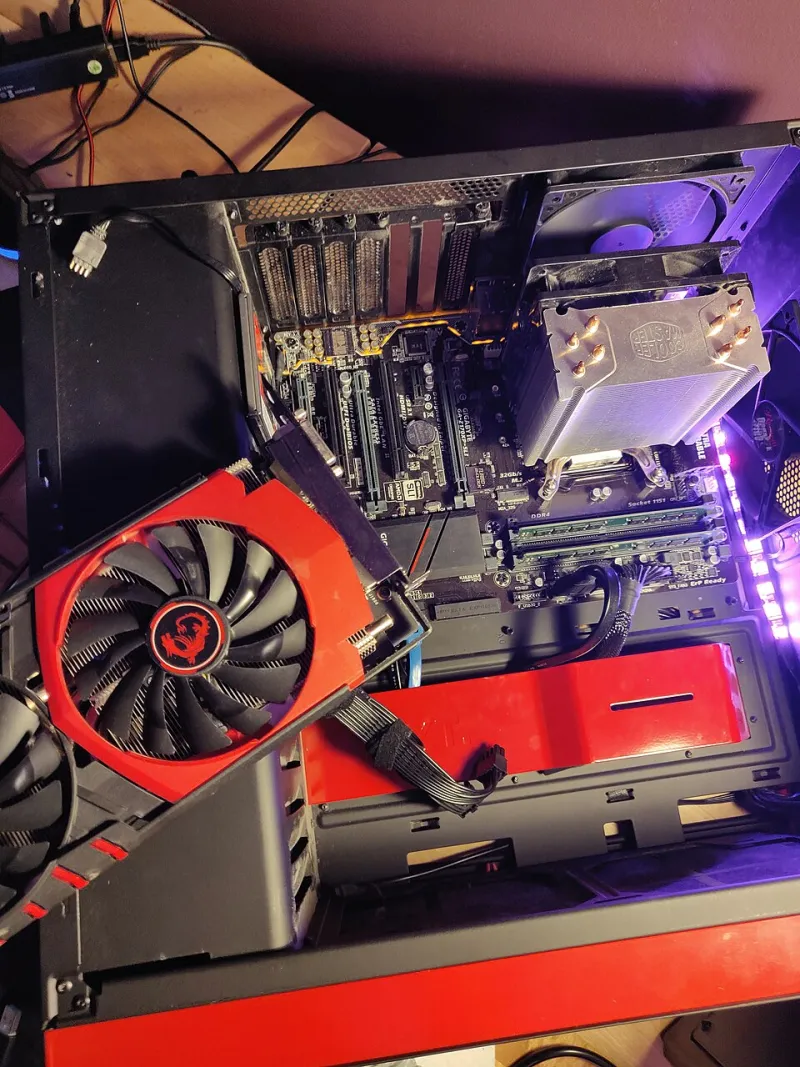
Somewhere along the way, buying a gaming PC stopped being about playing games and started being about how many colours your case can emit at once. Ten fans. Three lighting zones. A tempered glass panel that turns your bedroom into a small, faintly purple nightclub every time you forget to shut it down.
We are done with it. Not because RGB is evil — build what you like — but because it is a terrible use of a £900 budget in a country where most of us are gaming in a box room with a radiator we cannot move.
This build is the opposite of that. No glass. No lighting. No window into the cable nest you made at 1am. Just a black box that runs 1440p comfortably, keeps its mouth shut, and leaves room to grow.
What £900 should actually buy
Before the parts list, a principle. A gaming PC is four things: a GPU, a CPU, a power supply and cooling. Everything else is a delivery mechanism. Spend on the four, be competent with the rest, and ignore anybody telling you that a £180 motherboard will get you more frames. It will not.
Prices below are what we were seeing from UK retailers — Scan, Overclockers UK, Ebuyer, CCL and AWD-IT — through autumn 2026, VAT included. They wobble weekly, so treat them as a shape rather than a promise.
| Part | Pick | Approx. price |
|---|---|---|
| CPU | AMD Ryzen 5 7600 | £145 |
| Cooler | Thermalright Assassin King 120 SE | £28 |
| Motherboard | MSI Pro B650M-P (mATX) | £105 |
| Memory | 32GB (2x16GB) DDR5-6000 CL30 | £78 |
| Graphics | AMD Radeon RX 9060 XT 16GB | £299 |
| Storage | 1TB PCIe 4.0 NVMe | £52 |
| Power supply | 650W 80+ Gold, semi-passive | £70 |
| Case | Fractal Design Pop Mini Air (mATX) | £75 |
| Extras | 2x Arctic P12 fans | £14 |
| Total | ~£866 |
That leaves about £34 of slack for delivery, a SATA cable you forgot, or the inevitable price creep on the graphics card.
Why this spec and not the obvious one
The RX 9060 XT 16GB is the load-bearing decision. Sixteen gigabytes of VRAM at 1440p in 2026 is not a luxury, it is basic hygiene — plenty of current titles will chew through eight gigs and start swapping textures before you have finished the tutorial. Yes, you could spend more on a faster card with less memory. You would regret it by 2028.
The Ryzen 5 7600 is the other quiet win. Six cores is plenty for gaming, it sips power compared with the big chips, and it sits on AM5, which is the platform with the longest remaining runway. The stock cooler is fine, but the £28 tower cooler is the difference between a PC you can hear and a PC you cannot, so it stays in.
Thirty-two gigabytes of DDR5-6000 CL30 is the sensible middle. Sixteen would save you thirty quid and cost you stutters in a couple of years. Sixty-four is money better spent on a better graphics card.
Noise: the spec that never makes the box
Nobody puts a decibel figure on the marketing material, which is a shame, because it is the specification most likely to decide whether you actually enjoy owning the thing.
Our target for this build is around 30 dB(A) at one metre when idling — essentially inaudible over a fridge — and roughly 38 to 40 dB(A) under a heavy gaming load. That is a normal conversation at the other end of the room, not a vacuum cleaner.
Three things get you there. A semi-passive power supply, so the fan stops entirely at low load. A case with a mesh front rather than a sealed slab with a strip light glued to it, because airflow you have means fan speed you do not need. And a fan curve set by hand in the BIOS rather than left on the motherboard's default panic mode, which ramps to 100% the moment anything hits 65°C.
Spend fifteen minutes in the BIOS. Set the case fans to stay under 50% until the CPU passes 70°C. Your ears will thank you every single evening.
Thermals in a small room
A bedroom in a Victorian terrace gets warm. Add a 300W graphics card and a closed door and you have created a small sauna with a monitor in it. Undervolting the 9060 XT is not optional here — it is part of the build. A modest negative voltage offset will knock 30 to 40 watts off the load figure and a couple of degrees off the room, and you will not feel the frame rate difference.
Also: do not put the case hard against a wall or inside a desk cubby with a back panel. Two hundred millimetres of clearance behind and above is the difference between a case that breathes and a case that bakes.
Cable management for people who resent cable management
You do not need to be a perfectionist. You need three things: the 24-pin routed behind the motherboard tray, the front-panel connectors bundled together with a velcro tie, and nothing touching a fan blade.
That is it. A mATX case with a shallow cable channel and a 650W unit with reasonable cable length will get you there in twenty minutes. Ignore the builds on Instagram with individually braided combs. They took four hours and they look worse in six months when the dust arrives anyway.
The upgrade path
This is where the boring choices pay off.
CPU: AM5 has years left in it. In 2028 you can drop in a used eight-core without changing the board or the memory.
Graphics: the 650W Gold unit comfortably covers a card up to around 250W, so a future mid-range upgrade is plug-and-play. Going beyond that means a new power supply, and that is fine — it is a £70 problem, not a £900 one.
Storage: the board has a second M.2 slot. Add 2TB for £90 when the Steam library gets out of hand, which it will.
Memory: two slots free means 64GB later if you ever need it. You probably will not.
Where we would bend
If the graphics card price spikes, drop the case to something plainer and keep the GPU. If you already own a monitor, keyboard and mouse, this lands comfortably under £900. If you do not, buy a decent 1440p IPS panel second-hand from a UK seller and put the difference towards the card — a good monitor outlives two builds.
And if you are tempted to spend the leftover £34 on an LED strip, spend it on a second case fan instead. One is silence. The other is a colour you will turn off within a fortnight.
The verdict
A £900 gaming PC in 2026 does not need to look like a gaming PC. It needs to run 1440p well, fit under a desk in a small flat, stay quiet enough that a housemate does not complain, and accept upgrades without a full rebuild.
This one does all four. The lights can stay off.