Diplomacy in a Cardboard Box: Building a Gaming PC From Mismatched Christmas Gifts
Photo: PC components graphics card and motherboard in Christmas gift boxes under tree, via media.moderngamer.com
There is a particular look that crosses a PC builder's face on Boxing Day. It is not disappointment, exactly. It is the quiet horror of watching three relatives hand over three perfectly nice components that absolutely do not go together. The graphics card is lovely. The case is lovely. The power supply is... optimistic. And somewhere under the tree is a motherboard that takes a different memory standard to the RAM your mum bought in the Black Friday sale.
This is the gift receipt build: the post-Christmas PC assembled from other people's good intentions. It can work. It just needs a bit of diplomacy, a few checks before the paper comes off, and a realistic plan for the bits that will never fit.
Ask for Part Numbers, Not Surprises
The single best thing you can do before Christmas is send a wishlist with exact model numbers. Not 'a graphics card'. Not 'some DDR5'. Actual SKUs, with a note saying 'this exact one, please, or a gift receipt'. It feels mercenary. It saves hours.
If the list has already been ignored - and it will have been - do not open every box and start sighing. Collect the model numbers first. Most boxes have a label on the side with the part number and, on motherboards and PSUs, a barcode that tells you more than the front of the box does. Photograph everything. This is the evidence you will need for the returns counter, the eBay listing, or the family group chat.
The Four Checks That Save Boxing Day
Compatibility is not mysterious. It is four checks, in this order.
1. CPU socket and chipset. An AM5 processor will not go into an LGA1700 board, and a motherboard box that says 'B650' is telling you it expects an AMD chip. Check the socket name on both boxes. If the CPU is a generation newer than the board, check whether the board has BIOS flashback - some do, some need an older chip to update first.
2. Memory generation. DDR4 and DDR5 are not interchangeable, and the notches are close enough to fool a tired person at 11pm. Check the motherboard spec sheet. A board that takes DDR5 will not accept the DDR4 kit your uncle found at a good price, however much he insists it will 'just fit'.
3. Power and connectors. Add up the graphics card and CPU figures roughly, then add 150W for everything else. A 550W unit is fine for a modest 1080p card and not fine for a big 1440p one. Also check the connectors: a modern card may want two or three 8-pin plugs, and a cheap older PSU may have one. Do not use adapters to fix this. Buy a proper unit or change the card.
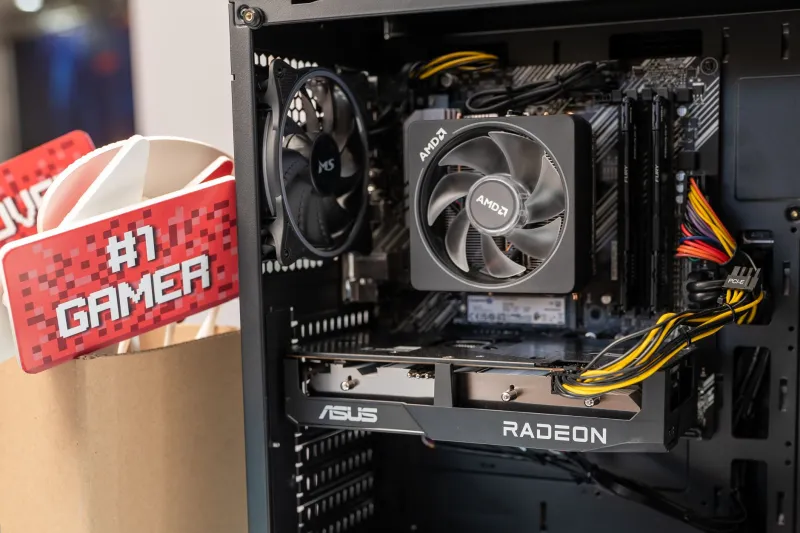
4. Physical fit. Graphics card length against case clearance, cooler height against side panel, radiator size against mounting points. Manufacturers publish these numbers. A tape measure and two minutes on the product page will save you a lot of swearing.
The Receipt Problem, Explained Without Shouting
Here is the awkward truth: a gift receipt is not a legal right to a refund. Under the Consumer Contracts Regulations 2013, if someone bought online, they generally have 14 days to cancel from delivery and another 14 to send it back. But that right belongs to the buyer, and the refund goes to the original payment method. A gift receipt helps, but it does not magically transfer the purchase.
In practice, most UK retailers are more generous than the law requires, especially in January. Currys, Argos and John Lewis all run extended festive return windows, usually 30 days or so from purchase, provided the item is unused and the packaging is intact. Amazon UK is similar. specialist suppliers such as Scan, Overclockers UK and Ebuyer tend to follow the 14-day distance-selling rule closely, sometimes with a restocking fee on opened items. Check the current policy before you set off, because these things change.
In-store purchases are different. If the part is not faulty, the retailer does not have to take it back at all. Many will offer an exchange or credit note as a goodwill gesture, but nobody is obliged to. Be pleasant at the counter. It genuinely helps.
Turning Duplicates Into Progress
You will end up with at least one part that cannot be returned: the wrong RAM, a second SSD, a case that is three centimetres too short. Do not let it sit in a cupboard gathering guilt.
CeX will take boxed, working components for cash or store credit, though the offer will be well below retail. eBay UK is better for newer parts if you are happy to post them, and Facebook Marketplace is fine for cases and monitors if you are willing to deal with messages that just say '£20?'. Use the money to buy the one part that bridges the gap: a correct memory kit, a longer PSU, a case with proper clearance.
If a relative is genuinely upset about a mismatch, frame it as a swap rather than a rejection. 'This is brilliant, but it needs a different board to work - can we put the money towards that?' is a much easier conversation than 'this is wrong'.
The Build Itself: Order of Operations
Once you have a compatible set, build outside the case first. Motherboard on its box, CPU in the socket, cooler mounted, one stick of RAM in the right slot, graphics card in the top PCIe slot, PSU connected. If it posts on the bench, it will almost certainly post in the case.
Then fit the PSU, route the 24-pin and CPU cables before you screw the board down, and leave the graphics card until last. Install Windows from a USB stick, let Windows Update do its thing, then install the chipset driver from the motherboard maker's site. Only after that should you worry about fan curves and lighting.
One January note: if the board needs a BIOS update for the CPU, do it with the machine on a stable surface and a wired keyboard, not balanced on your knee. And if the January sales tempt you into a better graphics card, check the PSU first. The gift receipt build has a habit of growing.
The Post-Christmas Verdict
A PC built from mismatched presents is rarely the machine you would have chosen. It is often a perfectly good one. The trick is to treat the parts as a starting point rather than a finished spec, keep the receipts where you can find them, and remember that nobody bought you a graphics card hoping to start an argument. A little planning before Boxing Day, and a little tact afterwards, gets you a working 2026 gaming PC and a family that still speaks to you in February.