The £70 Power Question: Why Cheap PSUs Cause Crashes Nobody Blames Them For
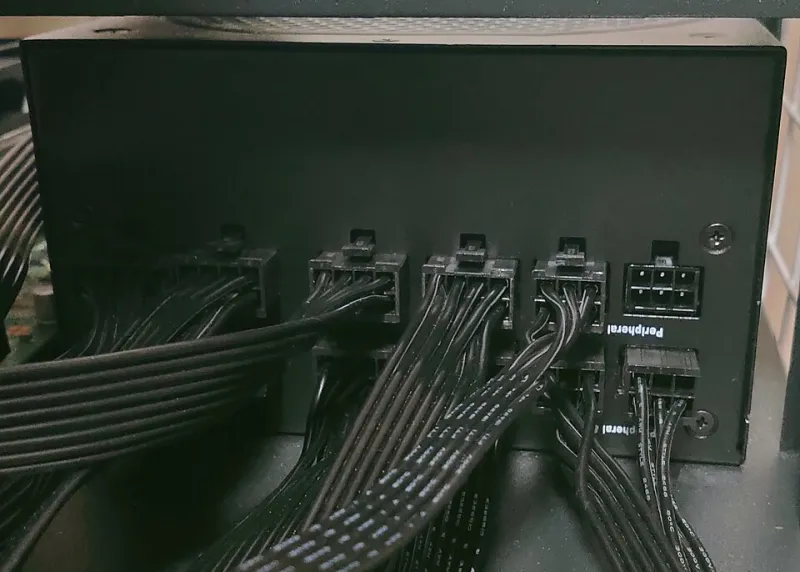
Photo: Project Kei, CC BY-SA 4.0, via Wikimedia Commons
The power supply is the last line on the spreadsheet and the first thing that gets cut. You have spent £250 on a graphics card, £120 on a CPU and £90 on a board, and suddenly £70 for a box that does nothing visible feels like a lot of money for a component that does not render a single frame.
So people spend £38 instead. Six weeks later the machine restarts when they alt-tab out of a game, or shuts down cleanly mid-match with no blue screen and no event log entry, and they spend a fortnight reinstalling drivers before anyone suggests the PSU.
The tier list is a filter, not a verdict
Community tier lists are useful, and we are not going to pretend otherwise. They compress years of professional reviews into something you can scan in a minute. But they answer a narrower question than the one you are asking.
A list entry is usually for the platform at one wattage, at one point in time. Manufacturers swap capacitors, change fan suppliers and revise platforms without changing the model name, so the 750W version that scored brilliantly may share almost nothing with the 550W unit you are looking at. Lists also lag reality by a year or two, and they cannot tell you what is actually in stock at Scan or Overclockers UK on a Tuesday in November, or which of the three units at £70 is currently on a proper discount.
Treat the list as a way to strike out known disasters. Do not treat it as a ranking of what you should buy this week.
Transient spikes are the part that actually trips
A modern GPU does not draw a steady 220W. It draws a spiky, spiky 220W with excursions that briefly hit two or three times its rated board power for microseconds. The PSU has to absorb those without the over-current protection firing and shutting the whole system down.
This is where cheap units fail in a way that looks like something else. A 650W supply with a weak single 12V rail, sloppy OCP thresholds and a group-regulated design from 2014 might cope fine on a synthetic benchmark and then fold the moment a game engine does something spiky. You get a shutdown, not a crash, and shutdowns get blamed on Windows, on the GPU, on the RAM, on anything but the £40 box.
The practical answer is headroom. For a card that pulls 200-250W, a decent 650W unit gives you the excursion room you need without paying for capacity you will never use. Buying a 550W supply with a 250W card and a 125W CPU is technically within spec and practically asking for trouble.
What £70 actually buys in Britain in 2026
It buys more than it did three years ago. At the time of writing, £70 lands you a good 650W Gold unit from a name brand if you shop around, or a very solid 550-600W Bronze if you catch a promotion.
The efficiency badge matters less than most people think. Moving from Bronze to Gold on a system that draws maybe 300W for four hours a day saves you a few pounds a year at current UK electricity prices. Buy the better platform, not the shinier sticker.
Worth shortlisting as archetypes rather than gospel: the Corsair RM650e, the be quiet! Pure Power 12 M in 650W, the Seasonic Focus GX-650 when it drops below £80, and the MSI MAG A650BN as the realistic budget floor. Anything significantly cheaper than that floor is where the gamble starts.
Five things to check before you click buy
Who honours the warranty, and where. Five to ten years is the norm on decent units, two years is a warning sign. Post-Brexit, an RMA to a European distributor means posting a 2kg brick abroad, paying the shipping and waiting weeks. Corsair and a few others run UK-side handling; others rely on the retailer. Check before you need it.
The connector count. Count the separate PCIe 8-pin cables, not the plugs on the ends of them. A single daisy-chained cable feeding a 250W card is a recipe for voltage droop and hot connectors. If a 12V-2x6 connector is on your three-year plan, buy for it now.
Real reviews, not spec sheets. Look for a teardown with load testing: ripple, hold-up time, OCP behaviour, whether the 12V rail stays inside 1% under crossload. Hardware Busters, TechPowerUp and KitGuru do this properly. If you cannot find a single load test anywhere, that is your answer.
The retailer's returns process. Under the Consumer Rights Act 2015 you have 30 days to reject faulty goods outright, then the right to repair or replacement. Online orders also get 14 days under the Consumer Contracts Regulations, though unused and usually at your postage cost. Coil whine is rarely treated as a fault, but some retailers will swap a unit rather than argue. Keep the box and the receipt.
Physical fit. Length is the killer in small cases, and 160mm is common on the good stuff. Check the cable type too, because a non-modular unit in a compact mATX build turns into a bird's nest against the GPU backplate.
Red flags worth walking away from
A 700W no-name unit for £30 where the 12V rail is only rated for 400W combined. Peak power claims on the box. No efficiency certification and no third-party review. A two-year warranty on a component you expect to last a decade. And any listing that shows a single PCIe cable for a card that needs two.
The rest of the chain matters too
A good PSU plugged into a fifteen-year-old four-way from a drawer is still a fire risk. Use one surge-protected strip, do not daisy-chain, keep the intake clear and clean the filter. And when you are diagnosing instability, test the PSU early rather than last: a clean shutdown under load with no error is the classic signature, and swapping in a known-good unit costs you an evening instead of a fortnight of driver roulette.
Seventy pounds spent properly buys you stability you will never notice, which is exactly the point. Seventy pounds spent badly buys you a dead graphics card and a very annoying phone call.