Bent Trays and Missing Standoffs: Buying a Second-Hand PC Case in the UK Without the Regret
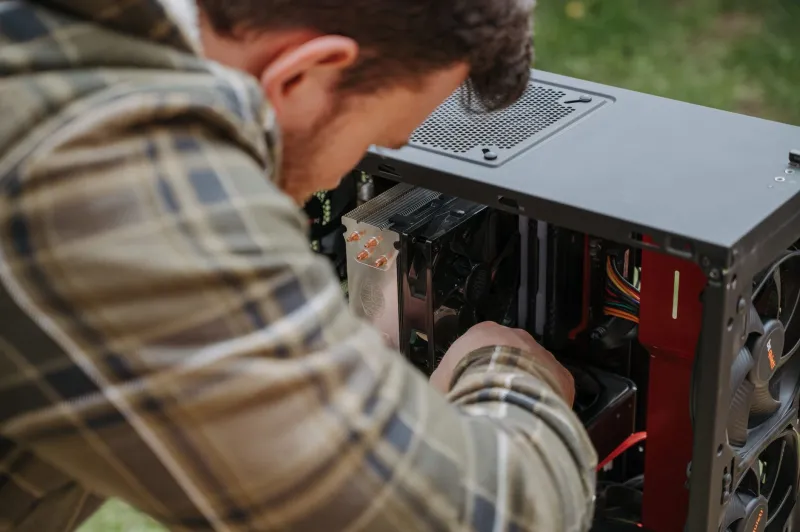
A case is one of the few PC parts where buying second-hand genuinely makes sense. It has no firmware, no drivers and no mystery about whether it has been mined on. It is a metal box with some fans and a bit of glass. And yet a cheap used case is also one of the easiest ways to turn a straightforward build into an afternoon of swearing at a bent motherboard tray.
The appeal is obvious. Thirty quid on Facebook Marketplace can get you something that cost £90 new two years ago, and a better case often means better airflow, less noise and a desk that looks less like a 2014 LAN party. The risk is equally obvious: UK listings are packed with cases that have been dropped, stripped, drilled, lost their standoffs or had their front-panel cables snipped by someone who did not know what they were doing.
This is not a guide to finding a rare bargain. It is a checklist for not buying a problem.
Why a used case is worth a look, and when it is not
If you are building on a tight budget, a used case can free up money for the parts that actually affect frame rates. A decent £30 case with two working fans is often a smarter spend than a new £30 case with one noisy fan and a front panel that blocks half the intake.
The trouble starts when the case has been modified. A drilled fan hole is not automatically a dealbreaker, but a missing motherboard standoff is. A scratched side panel is cosmetic; a bent motherboard tray can stop your board sitting flat, which can stress the CPU socket and make a build feel cursed before it has even posted.
Use used cases for standard builds, budget refreshes and second machines. Be much more careful if you are moving a high-end build, using a large graphics card or want a clean warranty-friendly setup.
Read the listing like a sceptic
Start with the photos. A good seller will show the inside of the case, the rear expansion slots, the front panel connections and the fan mounts. If every photo is a moody shot of the front glass with the side panel on, ask for more before you travel.
Look for the phrase "no standoffs" or "some screws missing". Standoffs are cheap to replace, but missing ones often mean the seller removed the board without keeping track of what went where. That is a warning sign for how the rest of the case has been treated.
On eBay UK, read the item specifics rather than the title. A case listed as "ATX" may be an older ATX standard with poor clearance for modern graphics cards. Check the maximum GPU length and CPU cooler height if the seller has listed them. If they have not, ask. If they cannot measure, assume the worst.
CeX can be a decent option because you get a returns route, but stock varies by shop and the photos are often generic. Treat a CeX case like any other used case: inspect it in person if you can.
The five-minute inspection that saves a build
Motherboard fit and standoffs
Before you hand over money, check that the case has standoffs in the right places for your motherboard size. ATX, micro-ATX and mini-ITX boards use different mounting points. A case that only has micro-ATX standoffs may still fit an ATX board if the tray is drilled for it, but you need the right standoffs and screws.
Look at the motherboard tray itself. Small dents around the standoff holes are common and usually harmless. A tray that is visibly bowed or twisted is not. If the case will not sit flat on a table without rocking, walk away.
Front panel and proprietary wiring
This is the classic used-case trap. Big-brand prebuilt cases often use proprietary front-panel connectors that do not plug into a standard motherboard. If the power button, USB ports or audio jacks use a single block connector rather than individual pins, check whether your board supports it. Most consumer boards do not.
Standard front-panel wiring is a bundle of small pins labelled power, reset, HDD LED and so on. If those are present and intact, you are in good shape. If the seller has cut them off or lost the adapter, budget for a replacement or a new case.
Fan mounts, radiator space and airflow
A used case with three fans is not automatically good. Listen to them if you can. A fan that rattles or grinds is on its way out. Cheap fans are easy to replace, but factor that into the price.
Check the fan mounts for cracks or stripped screw holes. Plastic mounts can crack if someone has overtightened screws. Metal mounts are more forgiving.
If you plan to use an all-in-one liquid cooler, measure the radiator space. A 240mm radiator needs clearance at the top or front, and some older cases advertise support but block it with drive cages or thick front panels. Ask the seller to measure the internal clearance rather than trusting the box art.
Glass, panels and hidden cracks
Tempered glass side panels can chip at the edges and then shatter later. Look closely at the corners and around the mounting holes. A small chip is a risk. A crack is a no.
Check that all the panels fit properly. A side panel that will not sit flush usually means a bent frame or a missing clip. That is the kind of fault that will annoy you every time you open the case.
The tray, the paint and the smell test
Smoke smells linger in foam and dust filters. If the case smells strongly of cigarettes, assume it will take weeks to clear. If it smells of damp, walk away. A British garden shed is not a good home for a steel case.
Look for rust around the bottom edges and screw holes. Surface rust on a cheap case is not always fatal, but rust inside the motherboard tray is a sign of long-term damp storage.
Shipping and collection: the UK practicalities
A case is bulky and awkward. Postage on eBay UK can easily add £10 to £20, which kills the bargain. Collection only is common for a reason. If you are travelling by train, remember you have to carry it home. A mid-tower case is not heavy, but it is big, and a busy Saturday train is not the place to discover that.
If you are posting, ask the seller to remove the glass panel or pack it separately. Royal Mail and Parcelforce handle thousands of parcels a day, but a case with a glass panel is a gamble. A cracked panel is not always obvious from the outside of the box.
When collecting, inspect the case before you pay. Do not let a seller rush you. A genuine seller will not mind you checking the standoffs and front panel. If they do, that is your answer.
The walk-away list
Walk away if the motherboard tray is bent, the standoffs are missing and the seller cannot tell you which ones are needed, the front-panel wiring is proprietary with no adapter, the glass is chipped or cracked, the frame is twisted, the case smells of damp or smoke, or the seller will not let you inspect it before payment.
A used case can be a brilliant cheap upgrade. It can also be the reason your next build will not post. The difference is usually five minutes of checking and a willingness to say no.
Final thought
A £30 case is only a bargain if it does its job. If you have to buy standoffs, fans, a front-panel adapter and a new side panel, you have spent more than a new budget case would have cost. Buy the boring one that fits your board, has standard wiring and sits flat on the table. Your build will thank you.