Second-Hand, First-Class: A £700 Used-Parts 1440p Rig Built From CeX and eBay UK
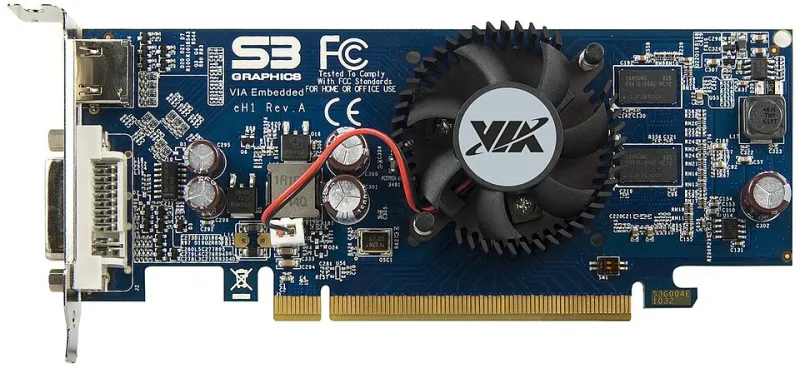
Photo: VIA Gallery from Hsintien, Taiwan, CC BY 2.0, via Wikimedia Commons
Let's be blunt: £700 buys you a fairly sad new PC in 2026. It buys you a genuinely good used one. The trick isn't finding bargains — it's building something you won't regret in February when a fan starts grinding. This is the build I'd put together today from CeX, eBay UK and the odd Facebook Marketplace collection, with a realistic budget and a bit of slack for the inevitable dud.
The £700 target, stated honestly
I'm budgeting roughly £620–£650 for the parts themselves and holding £50–£80 back as a contingency. That's not pessimism, it's postage, a return, and one part that turns up with a bent bracket. If you spend every penny on components you'll be the person posting a photo of a cracked PCIe slot asking if it's fine.
Everything below assumes you already have a monitor, keyboard and mouse. If you don't, £700 is not the number — £900 is.
What's safe second-hand, and what absolutely isn't
Used CPUs are close to risk-free. Silicon either works or it doesn't, and nobody has ever killed a Ryzen 5 by using it normally. Buy from a seller with clear photos of the pins or pads and you're fine.
Motherboards are the middle ground. They're the part most likely to arrive with a bent pin, a missing I/O shield, or a mystery fault the seller genuinely didn't know about. Buy from CeX where you can walk it back into a shop, or from an eBay seller who accepts returns. Avoid 'sold as seen, no returns' listings entirely — that phrase is doing a lot of work.
Graphics cards are where the real money is and where the real risk lives. Covered below.
Power supplies: buy new. Always. A £25 used PSU of unknown age is the single worst value proposition in PC building, and it's the one component capable of taking everything else with it. Same for storage — a used NVMe drive with 40,000 hours on it is not a saving, it's a countdown.
Cases and coolers are fine used if the photos show the glass intact and the fans aren't beige with dust. Air coolers barely age; just check the mounting hardware is all there, because a missing AM4 bracket is a £12 annoyance and a week of waiting.
CeX versus eBay UK: two different safety nets
CeX is the boring, safe option and I mean that as a compliment. Prices are fixed, so there's no haggling and no sniping — you pay roughly what the market says. In exchange you get a 24-month warranty on most second-hand items, a grading system (A, B, C) you can learn to read, and a physical shop counter you can stand at. Posting a faulty GPU back to a warehouse is a different emotional experience to handing it to a person in a Norwich branch.
The catch is choice. CeX stock is whatever walked in that week, and webstock from a distant branch means paying postage anyway. Check the grade carefully — a Grade B card will have scuffs, and 'B' does not mean 'cosmetically imperfect but otherwise pristine' in everyone's interpretation.
eBay UK gives you range and price discovery, plus the eBay Money Back Guarantee, which is genuinely useful if something arrives not as described. But read the seller type. A business seller has to give you a 14-day cancellation right and is bound by the Consumer Rights Act; a private seller is a different legal animal and the guarantee is your main protection. Filter to 'returns accepted' where you can, and treat any listing with three stock photos and a one-line description as a lottery ticket rather than a purchase.
Spotting a card that mined for a living
Ex-mining cards aren't automatically bad. A card run undervolted in a temperature-controlled room is often healthier than one that lived in a teenager's ITX case with one intake fan. But you should know what you're buying.
- Bulk listings. One seller with eleven identical RX 6800s and a feedback history full of graphics cards is not a gamer clearing out a wardrobe.
- Multiple accounts, generic names. 'techdeals_uk_2026' with 40 feedback is a shop front.
- Modded BIOS. Ask for a photo of GPU-Z or HWiNFO on screen. If the card reports odd clocks, a strange power limit, or won't show a vBIOS version, walk away.
- Fan wear. Mining cards run fans at 70% for years. Look for bearing noise in a video, or ask the seller to film a 30-second clip from cold start.
- Memory pad residue. Oily seepage around the memory chips and a crusty, dried-out paste line suggests a card that ran hot for a long time and has been repasted — sometimes well, often badly.
- The word 'mining' anywhere in the seller's other listings. Enough said.
A little pragmatism: a clean, tested 6700 XT or 6800 with a fortnight's return window is a better bet than a cosmetically perfect card with no returns at all.
Postage, collection and the great Evri gamble
A graphics card is the one part I'd almost always collect in person. Cash on collection means you can see it running before money changes hands — bring a laptop, an eGPU enclosure is overkill, but ask the seller to demo it in their machine. Meet somewhere sensible, and never send a bank transfer to a stranger for a collection item.
If you must post, insist on tracked and signed, and pay the extra for adequate insurance. Royal Mail Special Delivery is the safest domestic option; the cheaper couriers are fine until they aren't, and a £250 card in a jiffy bag is a conversation nobody enjoys.
One more UK-specific annoyance: 'collection only' listings in Cornwall when you're in Leeds. Do the maths before you get attached.
The parts list
| Part | Spec | Source | Target price |
|---|---|---|---|
| CPU | Ryzen 5 5700X | CeX / eBay | £85 |
| Motherboard | B550M, mATX | CeX | £70 |
| Memory | 16GB (2×8GB) DDR4-3200 | eBay | £50 |
| Graphics | Radeon RX 6800 16GB | eBay, returns accepted | £250 |
| Storage | 1TB NVMe, new | Retailer | £55 |
| PSU | 650W Gold, new | Retailer | £70 |
| Case | mATX, used | eBay / CeX | £45 |
| Cooler | 120mm tower air | eBay | £25 |
| Total | £650 |
That leaves £50 for postage and the one part you'll end up returning. DDR4 prices have been grim for a while now, which is exactly why a used AM4 platform still makes sense — you're not competing with new-build demand for memory.
Where the upgrade headroom actually lives
Be clear-eyed: AM4 is a dead socket. There's no future CPU to buy into. What you get instead is cheap entry and one obvious final upgrade — a used 5700X3D later down the line, which is a genuine step up in games and often lands around £150–£180 used.
Everything else carries forward. The 650W Gold PSU will happily run a much newer card. The case and cooler are reusable. The 1TB drive can become a game drive when you add a second. And because B550 gives you PCIe 4.0 to the graphics slot, a future GPU upgrade won't be strangled by an old bus.
If you'd rather have a platform with a future, AM5 is the honest answer — but you'll pay £250+ more for the privilege and you won't get more frames today. That's the trade, and it's yours to make.
The rule that keeps this sane
Buy the boring parts new, buy the expensive parts used, and never spend your contingency before the machine posts. Do that and £700 gets you a 1440p machine that'll hold its head up for years — and a story about the time you drove to Swindon for a graphics card.